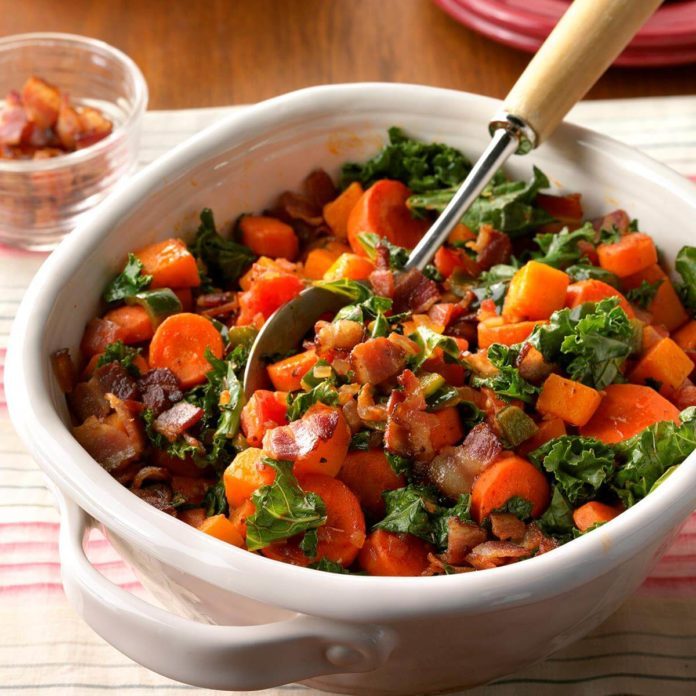
Carrot and Kale Vegetable Saute - Keto Recipes

Carrot and Kale Vegetable Saute
Ingredients 
  • 8 bacon strips, coarsely chopped
  • 4 large carrots, sliced
  • 2 cups peeled cubed butternut squash (1/2-inch pieces)
  • 1 poblano pepper, seeded and chopped
  • 1/2 cup finely chopped red onion
  • 1 teaspoon smoked paprika
  • 1/4 teaspoon salt
  • 1/4 teaspoon pepper
  • 2 plum tomatoes, chopped
  • 2 cups chopped fresh kale

Directions

  • In a large skillet, cook bacon over medium heat until crisp, stirring occasionally. Using a slotted spoon, remove bacon to paper towels. Pour off all but 1 tablespoon drippings.
  • Add carrots and squash to drippings; cook, covered over medium heat 5 minutes. Add poblano pepper and onion; cook until vegetables are tender, about 5 minutes, stirring occasionally. Stir in seasonings. Add tomatoes and kale; cook, covered, until kale is wilted, 2-3 minutes. Top with bacon.
  • Test Kitchen Tips
  • Use kitchen shears to cut bacon into small pieces directly over the skillet.
  • The sweet, rich flavor of smoked paprika is made by slowly drying peppers over a fire for several weeks.
  • Poblano peppers are dark green and mild in flavor. When dried, they turn reddish black and are known as anchos.
Nutrition Facts
3/4 cup: 101 calories, 5g fat (2g saturated fat), 10mg cholesterol, 251mg sodium, 11g carbohydrate (4g sugars, 3g fiber), 4g protein. Diabetic Exchanges: 1 vegetable, 1 fat, 1/2 starch.


    Comments

    Popular posts from this blog

    Keto Garlic Bread

    The secret to really good low-carb bread? Cheese, glorious cheese! Fun fact: The same concept applies to  cauliflower crust . INGREDIENTS 1 c.  shredded mozzarella 1/2 c.  finely ground almond flour 2 tbsp.  cream cheese 1 tbsp.  garlic powder 1 tsp.  baking powder Kosher salt  1  large egg  1 tbsp.  butter, melted 1  clove garlic, minced 1 tbsp.  freshly chopped parsley 1 tbsp.  freshly grated Parmesan Marinara, warmed, for serving DIRECTIONS Preheat oven to 400° and line a large baking sheet with parchment paper. In a medium, microwave-safe bowl, add mozzarella, almond flour, cream cheese, garlic powder, baking powder, and a large pinch of salt. Microwave on high until cheeses are melted, about 1 minute. Stir in egg.  Shape dough into a ½”-thick oval on baking sheet.  In a small bowl, mix melted bu...

    Creamy Keto Potato Salad - Keto Recipes

    There are a few foods that I have never been able to bring myself to buy pre-made. Guacamole is one because the amount of work involved is worth the fresh taste. The other is potato salad. Why would I buy a pre-made potato salad that I eventually doctor up by adding more spices, more mustard, and more time when I could have just prepared it myself? Well, in theory anyway. Sure, I hate buying potato salad but nine times out of ten I wouldn’t actually make it either because it is time consuming! Anyone who has ever made fresh potato salad knows there is a fine line between under cooked taters and mashed potato salad. No thanks. Luckily, since I’ve been enlightened in the ways of ketogenic living I’ve also fell in love with “potato salad” all over again and now it’s easier than ever! The beauty about swapping out the starchy root vegetable for cauliflower florets is in the cooking and prep time. No more peeling and boiling potatoes that need time to cool and rest before you’ve f...

    A Keto Diet Meal Plan That Can Transform Your Body

    Research has demonstrated that  adopting this low-carb and high-fat diet can promote fat loss and even improve certain conditions such as type 2 diabetes and cognitive decline, This article explains what to eat and avoid while following a keto diet and provides a one-week keto meal plan to get you started. Share on Pinterest Ketogenic Diet Basics The  keto diet , as a rule, is very low in carbs, high in fat and moderate in protein. When following a ketogenic diet, carbs are typically reduced to under 50 grams per day, though stricter and looser versions of the diet exist Fats should replace the majority of cut carbs and deliver approximately 75% of your total calorie intake. Proteins should account for around 20% of energy needs, while carbs are usually restricted to 5%. This carb reduction forces your body to rely on fats for its main energy source instead of glucose — a process known as ketosis. While in ketosis, your body uses ketones — molecul...